Anjanadevib, CC BY-SA 4.0
Discover the rich history behind Andhra’s Original Cuisines—spicy, soulful dishes shaped by tradition, culture, and royal influence.

Avakaya mango pickle -Jagisnowjughead, CC BY-SA 4.0
Few things define a place like its food. When you think of Andhra Pradesh, the first image that comes to mind is spice — the kind that wakes up your senses and lingers in your memory. But have you ever wondered how traditional Andhra Food started ? What shaped their flavors, traditions, and fiery charm that the world now celebrates? Let’s explore the fascinating story behind one of India’s most vibrant regional cuisines.
A Land Shaped by Geography and Spice

United Hotel Management Academy, CC BY-SA 4.0
Andhra Pradesh sits between the Eastern Ghats and the Bay of Bengal — a region blessed with fertile deltas, abundant chilies, and a long coastline. This geography naturally shaped the food habits of its people. The abundance of rice and red chilies gave rise to meals that are hearty, spicy, and full of life. From the tang of tamarind to the aroma of curry leaves, the cuisines of Andhra Pradesh reflect a harmony between land, sea, and spice.

Rohu fish – Evangelin5, CC BY-SA 4.0
Long ago, the Vijayanagara kings ruled from Hampi. They loved bold flavors and brought new ideas through trade. Coastal cooks started using tamarind with seafood. In dry Rayalaseema, people learned to preserve food with chili and salt. Farmers mixed local ingredients with royal recipes. That’s how Andhra’s original cuisines took shape—simple, strong, and full of taste.
Royal Kitchens and Cultural Crossroads of Andhra’s Original Cuisines

Biriyani – FoodPlate, CC BY-SA 4.0
The roots of Andhra’s spicy foods run deep into royal history. During the Vijayanagara and Qutb Shahi dynasties, the royal kitchens became melting pots of Persian, Mughal, and Telugu influences. Exotic spices, nuts, and ghee entered everyday cooking, giving birth to dishes like Hyderabadi Biryani and Gongura Mamsam (sorrel mutton curry).

Yet, unlike other royal cuisines of India, Andhra’s food remained true to its local essence — bold, rustic, and fearless. Even the royal tables couldn’t resist the homely comfort of Pappu (lentils), Pulihora (tamarind rice), and Avakaya (mango pickle). That perfect balance between royal richness and rural simplicity is what makes Andhra’s Original Cuisines stand apart.
The Famous Dishes and Where They Came From
Every dish in Andhra’s original cuisines has a story.

Gongura -;PaletteOfZaaiqa, CC BY-SA 4.0
Gongura: This sour leaf grows wild in Guntur. Farmers pickled it to save it for rainy days. Soon it became the star of every meal—mixed with dal or eaten with rice and ghee.

Pulihora – B.K.Viswanadh, CC BY-SA 3.0
Pulihora: Tamarind rice started in temples. Priests made it as offering to God. The tang of tamarind, crunch of peanuts, and tempering of curry leaves made it a festival must-have.

Peearattu – ukanda, CC BY 2.0
Pesarattu: A healthy dosa made from green moong dal. Coastal families created it as a light breakfast. Stuff it with upma, and you have a full meal that keeps you going all day.

Kodi kuda – Karteeki4u, CC BY-SA 4.0
Kodi Kura: Village chicken curry from Rayalaseema. Slow-cooked with red chilies, coconut, and poppy seeds. It’s hot, rich, and reminds you of home.
You can also read – India’s Most Scenic Train Route?
Andhra Food Today

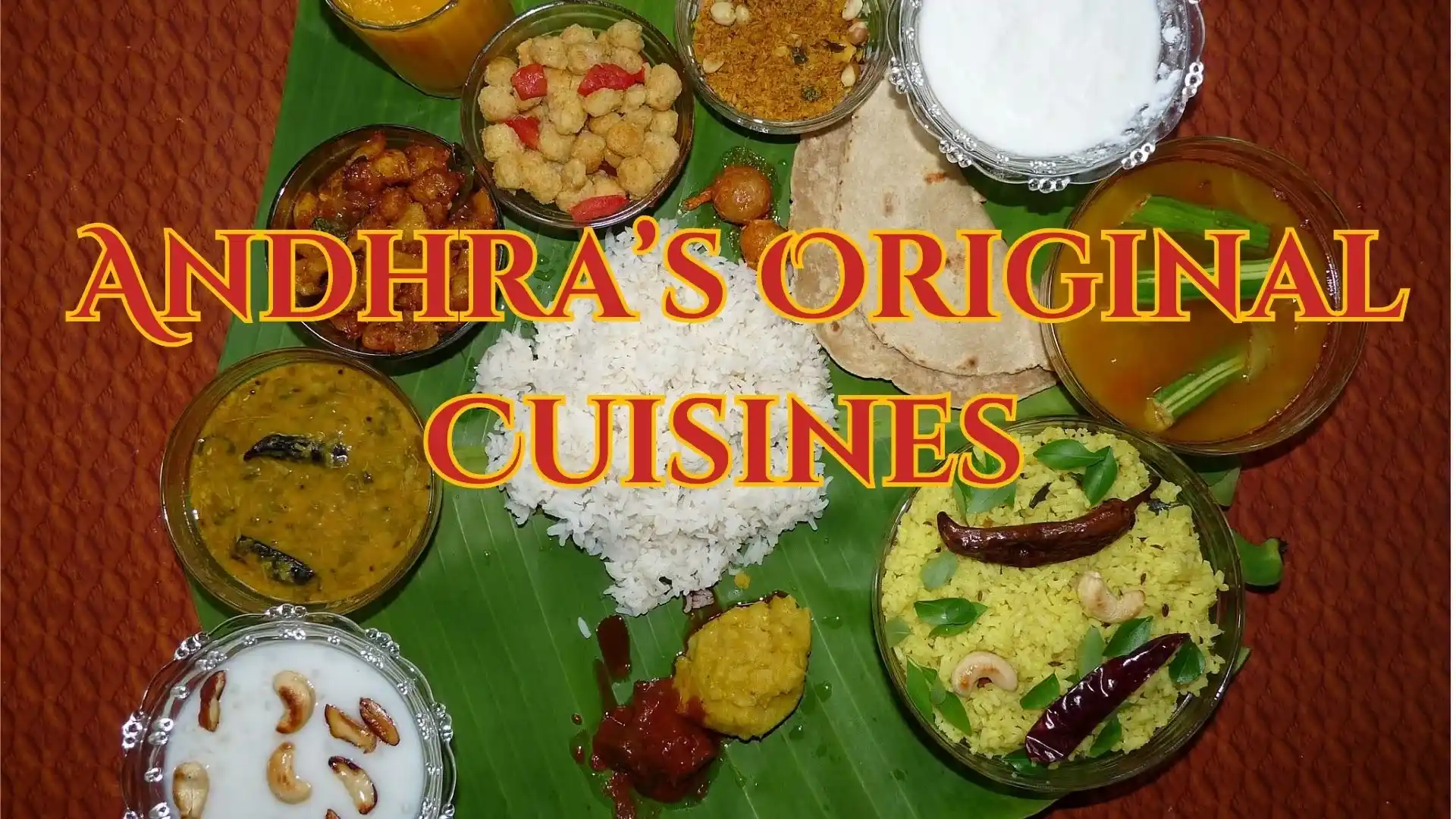
Andhra thali ,Pritya Books’s photo, CC BY 2.0.
Andhra’s original cuisines have traveled far. From small eateries in Hyderabad to restaurants in the US and UK, people now crave our spice. Pesarattu is a hit with health lovers. Gongura pickle sells online. Kodi Kura has fans in Dubai. Even movies and travel shows talk about Guntur chilies.
But the real taste is still in village kitchens—made by grandmothers using old clay pots and wood fire. Whether you love spice or stories, Andhra cuisine tells both in every bite.
Keep exploring with Travelseek — your window to India’s hidden flavors and untold stories.
You can also follow us on Facebook –Travelseek/facebook
you can share your thoughts by email to – contactus@travelseek.in